
When Trauma Speaks in Dreams: From Nightmares to Healing
For many years, I have experienced vivid dreams that stayed with me long after waking. You know the kind - that leave a trace of terror in your soul. At times they left me panicked, sweating, or in tears. For a long time, I wondered why my mind wouldn’t let me rest. But as I’ve learned more about trauma and healing, I’ve come to see that these dreams were not just random stories — they were my body and nervous system processing what once felt unbearable.
The man in the shadows
After being attacked as a child, I carried the fear of that moment with me into my nights. Because there was no justice, no safety restored, my nervous system never fully switched off the alarm.
For years, I dreamt of that man climbing onto the porch, slipping in through the window, or lurking in the shadows. I would wake terrified, convinced he was still there. These nightmares were my mind’s way of showing me how unsafe I felt, and how deeply the violation had crossed into what should have been safe space.
The shadow at my bedside
Later in life, I would wake screaming, convinced a shadowy man stood beside my bed — sometimes with a weapon, always threatening. My body reacted as though the danger was real: racing heart, shallow breath, paralysing fear.
It would take a long time to settle, to believe I was truly safe. Often it was my husband’s gentle reassurance — “You’re safe, I’m here” — that helped my body come back to calm.
These dreams weren’t simply bad luck. They were my nervous system replaying the terror I once lived through, long after the events had ended.
The sky turning black
Another recurring nightmare placed me in a crowded room — people busy talking, distracted — while I stared out of the windows at the sky. Suddenly, the clouds would race across the horizon, turning darker and darker until they threatened to consume everything.
I knew instinctively that if the sky turned fully black, it meant the end of humanity. I tried to raise the alarm, but no one listened. Chaos erupted. People screamed. The wind howled.
And then I would fall to my knees and pray. Over and over, I prayed, even as fear and confusion tried to silence me. Sometimes I came face to face with the devil himself — his eyes burning red as he tried to break my focus. But I clung tightly to a pinhole of light — and eventually, the sky would break open. The darkness would part. Blue skies returned, and peace was restored.
This nightmare always left me shaken. Yet, in time, I realised it carried a message: even in the darkest chaos, some part of me refused to give in. My deepest instinct was to cling to hope and faith until the light returned.
The plane in the sky
More recently, I dreamt I was driving away from my hometown on a warm evening. I looked to my right and noticed an airplane tilting sideways in the sky. Moments later, I saw it spiral down in my rear-view mirror, disappearing behind houses before a sudden explosion filled the horizon.
In the dream, I stopped my car and ran back, shouting to warn others of what I had seen. I wasn’t afraid for my own safety, nor did I believe my family was harmed. Instead, I felt a deep urgency to tell them the truth — that I had witnessed the danger before it struck.
This dream felt different. It showed me that I was no longer caught in the wreckage of my past. Instead, I had become the witness — the one who could see clearly and give warning, the one with a voice.
Why our dreams matter
Trauma doesn’t vanish when the danger is over. It lingers in the body, in the nervous system, and in the subconscious. During sleep — especially in vivid REM dreams — the brain processes fragments of memory, sensation, and fear. That’s why survivors often experience nightmares of catastrophe, violence, or overwhelming darkness.
But within those dreams, there is also meaning.
- The shadow by the bed revealed how the body holds memory long after danger has passed.
- The black sky showed despair and chaos, yet also my instinct to cling to light until hope returned — even when faced with evil’s red eyes.
- The plane crash symbolised my shift from silence to voice, from being inside the trauma to being able to stand outside it and share what I have seen.
When we sleep, especially during REM (rapid eye movement) cycles, our brains are busy sorting through the day’s experiences, emotions, and unresolved memories. For people who have lived through trauma, this process can be intense. Nightmares often appear because the brain is trying to integrate overwhelming experiences that were too much to process at the time they happened. Instead of being random, these dreams are the mind’s attempt to re-file fear and survival memories into a safer place.
This process is very similar to what happens in EMDR therapy (Eye Movement Desensitisation and Reprocessing), where eye movements or other forms of bilateral stimulation help the brain safely reprocess traumatic memories. In a way, our dreams show us that the body already knows how to heal — it just needs time, space, and sometimes guidance to finish the work.
This is why paying attention to our dreams can be so important. They give us glimpses into where we are in our healing — showing us not only the echoes of fear, but also the signs of resilience, faith, and growth that emerge over time.
From nightmares to healing
If you’ve experienced trauma, your dreams may sometimes feel frightening or relentless. But they are not meaningless. They are your mind and body’s way of working through what was once unbearable.
And here is the hope: even in nightmares, healing leaves its trace. The act of praying, of clinging to light, of finding your voice, of being reassured back into safety — these are not just dream details. They are survival strategies, signs of growth, and reminders that even after the worst has happened, restoration is possible.
Trauma may shape our nights, but healing shapes our mornings. We can wake not only with the memory of fear, but with the quiet knowledge that we are stronger than the darkness, and that peace always finds a way back in.


Breaking the Self-Fulfilling Prophecies of Trauma
Complex trauma leaves invisible imprints that can quietly shape how we see ourselves, others, and the world. One of the most powerful — and painful — ways this shows up is through self-fulfilling prophecies.
Rejection
Take rejection, for example. A simple, everyday situation like sending a text to a friend can trigger an entire spiral.
At first, the person waits patiently, refreshing their phone every few moments to check if the message has been read. When no reply comes, the internal dialogue starts:
“They’re ignoring me. I must have said something wrong. They don’t like me anymore.”
The mind races to scan previous conversations, searching for proof of where it all went wrong. Anxiety grows. A hidden “deadline” is set — a certain amount of time the friend has to respond before it confirms the fear of rejection.
The friend, of course, has no idea this deadline even exists.
If the reply doesn’t come, the spiral intensifies. In an attempt to take control of the rejection, the person with complex trauma may block the friend or cut contact first. From their perspective, this feels protective: “If you’re going to hurt me, I’ll end it on my terms.”
But to the unsuspecting friend — who may simply be at work, busy with children, or out of phone signal — this sudden reaction feels confusing and hurtful. They are accused, punished, or shut out without ever knowing a problem existed.
On the surface, the person with trauma may offer justifications: “I was worried when you didn’t reply… I thought something bad had happened.” Yet beneath this, the real driver is not concern for the other, but unresolved fears of rejection, betrayal, and abandonment.
And here’s the paradox: even if the original fear wasn’t true, the reaction makes it so. By blocking, ending the friendship, or pushing the other away, the feared outcome — rejection and loss of connection — becomes inevitable.
This cycle feeds the core beliefs shaped by trauma:
- Nobody loves me.
- Everyone rejects me.
- I’m not good enough.
Round and round it goes, reinforcing the very pain the person is trying to avoid.
Betrayal
Another common cycle is betrayal. Someone carrying the wounds of past betrayals may find themselves constantly scanning for evidence of it happening again.
This might look like secretly checking a partner’s clothing for lipstick marks or unfamiliar odours, going through pockets, scrolling through their phone, or dissecting every detail of a story for inconsistencies.
The brain, primed by past hurt, interprets what it sees through a lens of suspicion. Even something harmless — a text from a colleague, a receipt in a pocket, or a shift in tone — can be seen as “proof.” If you look hard enough, you’ll always find something that confirms your fears, because your mind will bend the evidence to fit the narrative.
But here’s the truth: if you are doubting someone to the point of needing to check, the relationship is already broken. Trust is gone.
If old wounds from previous betrayals remain unhealed, they get carried into every new connection. What begins as self-protection quickly becomes self-sabotage, pushing away the very safety and intimacy that is longed for.
The responsibility here isn’t about policing a partner. It’s about healing. You owe it to yourself — and to anyone you’re in a relationship with — to address the pain of betrayal before starting again. Otherwise, the past keeps dictating the future.
Self-Blame Is Not Self-Awareness
It’s important to note that constantly blaming ourselves is not the same as being self-aware.
We might say things like:
“Oh, I know it’s me. I’m really sorry, but it’s happened before and I was scared it would happen again.”
That isn’t true self-awareness — it’s a way of justifying behaviour that was unjust towards someone else. Words like this may sound accountable, but they often function as excuses that mask the deeper issue.
The impact we have on others matters. Carrying a diagnosis such as CPTSR, BPD, or any other label, is never a valid excuse for treating people badly or abusing others. Too often these words are used to hand away responsibility:
- “It’s my disorder that makes me volatile, it’s not me.”
- “I can’t help it, it’s my trauma response.”
But here’s the truth: we can all choose not to hurt the people who love us. Diagnosis can help us understand ourselves, but it should never be used as a shield to justify harmful behaviour.
We are all responsible for the impact of our words and actions. And with that responsibility comes a duty — to ourselves and to others — to do the work of healing.
No one is suggesting this work is easy. Trauma recovery is complex, layered, and often exhausting. But neuroplasticity means change is possible. The brain can rewire. New patterns can be formed. Which means we all have a choice.
True self-awareness is the first step. It doesn’t look like self-blame or excuse-making. It looks like recognising when our fears and reactions are spilling over onto others, and making a conscious commitment to break the cycle.
The Role of Self-Compassion
Personal accountability is vital, but we cannot reach it through shame or harshness. Without compassion, the inner barriers slam shut and survival mode takes over, making real learning and healing impossible.
Self-compassion allows us to face the truth of our patterns without being consumed by guilt or self-hatred. It creates the space to say:
“Yes, this is what I’m doing… and I can choose differently.”
Equally important are safe spaces — relationships, therapy, and communities where honesty is met with kindness rather than judgment. When someone feels safe enough to explore their reactions without fear of attack, their nervous system can soften, and change becomes possible.
Accountability without compassion risks retraumatising. Compassion without accountability risks enabling. True healing needs both.
It’s also important to acknowledge the impact on those who care. People who are empathetic will often go to great lengths to understand behaviours they don’t comprehend, simply because they care deeply or because they are committed to being a better friend, partner, or family member.
They may keep giving reassurance, keep offering chances, and keep moving the goalposts. They justify the behaviour to themselves, and to others who only see the harm being caused.
But the truth is, reassurance, understanding, and support have a shelf life if the person with trauma keeps repeating the same cycles without making any effort to change. Healing is a two-way street. Yes, we need compassion and safe support — but it cannot be given endlessly without some commitment from us in return.
Real change is not about masking, avoiding, or making excuses. It is about doing the work so the results become clear in our words, behaviours, and relationships.
Relationships are rarely unconditional. They require effort from both sides. If we want to keep the people who love us, then we must take responsibility and do the work.
Breaking the Cycle
Noticing when the spiral starts — whether it’s checking your phone every few minutes or rifling through someone’s belongings — is an opportunity to pause. The intensity of the reaction isn’t really about the other person. It’s about old wounds that still ache.
Supportive therapy, nervous system regulation, and learning to sit with the discomfort rather than act on it are powerful ways to begin breaking the pattern. Healing comes when we stop looking outward for proof of rejection or betrayal and start tending to what lives inside.
Complex trauma doesn’t have to dictate our relationships. With compassion, accountability, and awareness, the cycle can be interrupted, and connection — the very thing we long for — can finally become safe and sustainable.

The Power of Telling the Truth About Anxiety
Last night, during our CBT group for anxiety, we watched a short video showing common situations that can trigger anxious thoughts — like public speaking. The narrator offered examples of typical worries: “I might forget my words… I might embarrass myself… people will see I’m nervous and judge me.”
The suggested solutions were reframes: “It’s okay to be nervous, lots of people are… the more I talk the less people will notice… the more I practice, the better I’ll get.”
All useful strategies. But I couldn’t help noticing something important was missing — something that made all the difference for me personally in overcoming years of struggle with public speaking, even to the point of vasovagal syncope (fainting).
That missing piece? Telling the truth.
If we’re reframing our anxious thoughts with statements like “most people get nervous about public speaking” or “it’s okay to feel this way,” then what’s wrong with actually saying that out loud? While we are teaching people to reframe, why not also teach truth-telling? If it’s true — and it usually is — sharing it removes the pressure to pretend. Instead of battling with ourselves in silence, we let others in on the reality of our experience. That simple act of honesty dismantles the fear of being “found out” and replaces it with connection and understanding.
Why Masking Keeps Us Trapped
So much advice around anxiety encourages us to mask what we’re really experiencing. We’re told to “manage it,” “hide it,” or “reframe it” until it goes away. But in my experience, masking fuels anxiety. It adds another layer of fear: the hope that “no one will notice.”
Instead of helping, it creates pressure. We’re performing “okay-ness” on the outside while our nervous system is still convinced there’s an invisible lion in the room.
The Shift That Changed Everything
For me, the quickest and most effective way to remove the fear of speaking wasn’t hiding — it was honesty.
I began opening with the truth:
- “Speaking in front of people has been so difficult for me that I’ve fainted from fear.”
- “Although I know I’m among friends who aren’t here to attack me, my protective brain still scans the room for danger.”
- “Before I continue, could we take a moment to breathe together? Co-regulation helps me settle, and I’d appreciate your support.”
What happens in that moment is extraordinary. The fear of being judged dissolves, because I’ve already explained what’s happening. People understand. And instead of feeling alone in my anxiety, I feel connected.
Co-Regulation Before Self-Regulation
Neuroscience helps us understand why this works. Regulation doesn’t always start inside us — often, it starts between us.
When I invite others to breathe with me, we co-regulate. That shared rhythm brings safety to the nervous system. From there, self-regulation becomes possible.
This approach transforms public speaking from a battle with my body into an honest exchange of energy and understanding.
Anxiety Meets Authenticity
The truth is, nerves are human. Admitting them doesn’t make us weak — it makes us real. And real is where connection happens.
Rather than hoping no one notices, we can reframe our anxiety through authenticity:
- “It’s okay to be nervous.”
- “It’s okay to tell the truth about it.”
- “It’s okay to ask for support.”
That shift doesn’t just ease anxiety — it builds resilience, trust, and genuine connection.
Final Thought
If anxiety has been holding you back, try experimenting with honesty. In safe situations, name what’s happening for you. Ask for a moment to breathe together. You may find, as I did, that the weight of hiding is far heavier than the weight of truth.
Authenticity doesn’t just quiet the fear of being judged — it creates the safety and compassion we need to grow.

What Does It Really Mean to Love and Accept Yourself Unconditionally?
“Love and accept yourself unconditionally.”
It sounds beautiful, doesn’t it? But for many of us, those words land with a thud. Instead of comfort, we feel resistance. Instead of inspiration, we feel guilt, shame, or even anger.
I remember hearing that phrase at different points in my own healing journey and thinking: “If I can’t do this, does that mean I’m broken beyond repair?” What I didn’t realise then was that struggling to connect with those words doesn’t mean you’ve failed – it means you’re human, and often it means you’ve been through experiences that made self-love feel unsafe or unreachable.
The Myth of Instant Self-Love
We live in a culture that sells self-love as a quick affirmation, a bubble bath, or a mindset shift. But real healing doesn’t happen in a straight line.
When you’ve lived with trauma, shame, or the constant demands of an inner critic (what I call the “inner terrorist”), unconditional self-love isn’t a switch you flick on. It’s a gradual process of unlearning old patterns, meeting yourself with compassion, and building trust in your own nervous system.
What “Unconditional” Really Means
Unconditional love doesn’t mean approving of everything about yourself, all the time. It doesn’t mean never wishing you could grow or change.
It means not withdrawing care from yourself when you stumble.
It means showing up with gentleness when you’re messy, tired, or struggling.
It means refusing to abandon yourself in the moments you need support the most.
Think of how we’d ideally treat a child: even when they make mistakes, they’re still deserving of safety, warmth, and care. Loving yourself unconditionally is offering that same stance to yourself – even if you don’t quite believe it yet.
Why So Many of Us Struggle
If love in childhood was conditional – given when we behaved, withdrawn when we didn’t – then unconditional acceptance can feel foreign.
If trauma wired shame, hypervigilance, or self-blame into our nervous system, self-compassion may feel impossible.
And if we never saw unconditional love modelled, we may not even know what it looks or feels like.
This is not a personal failure – it’s the legacy of our experiences.
A Pathway to Self-Acceptance: TRUST
At A Positive Start CIC, I often come back to our framework TRUST, because building self-trust is the foundation of any healing journey.
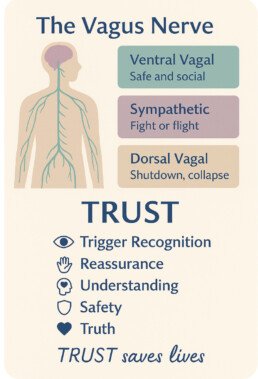
✨ Trigger recognition – Notice what comes up when you hear “love yourself unconditionally.” Does it spark discomfort, disbelief, or numbness? That awareness is the first step.
✨ Reassurance – Remind yourself that it’s normal to find this hard. Struggling doesn’t mean you’re failing – it means you’re human.
✨ Understanding – Explore where these difficulties come from, with compassion. Was love conditional in your past? Do old survival patterns still echo in your present?
✨ Safety – Create moments of calm and regulation where acceptance feels possible – whether through breath, movement, connection, or simply pausing.
✨ Truth – Honour your lived reality. Unconditional self-acceptance isn’t about pretending you’re always okay; it’s about acknowledging your truth without shame.
In Closing
Self-love isn’t a final destination. It’s a daily practice of choosing not to abandon yourself – especially when life feels heavy.
Sometimes unconditional love looks like celebration, but more often it looks like patience, persistence, and small acts of kindness.
So if the words “love yourself unconditionally” feel out of reach today, start smaller. Offer yourself compassion in one moment, one breath, one choice. Over time, these moments weave together into a foundation of trust – the kind of trust that allows love and acceptance to grow.
Because you are worth showing up for, exactly as you are.

Gratitude Attitude: Planting Seeds of Self-Worth
In our Self Discovery for Recovery program, we begin with the foundations: looking within, practising self-care, and repeating daily I Am affirmations. Why? Because repetition drives neuroplasticity. The more often we plant healthy thoughts, the stronger they grow.
Our thoughts shape our lives. Each one is a seed. Some grow into weeds that choke our growth, while others blossom into resilience, hope, and strength. The question is—are you planting intentionally, or letting weeds take over?
When we believe we have no choice, we often forget: not choosing is still a choice. By failing to plant with intention, we allow the wild seeds of negativity, fear, and comparison to take root. Gratitude, on the other hand, is a deliberate act. It is an attitude—a lens through which we view ourselves and the world. When we practise gratitude, we reinforce self-worth and create a ripple effect of compassion and hope around us.
The Myth of Toxic Positivity
Let’s clear something up: gratitude is not the same as toxic positivity. Toxic positivity dismisses pain, denies struggle, and insists on a smile no matter the storm. Gratitude is different. It doesn’t pretend life is easy. It acknowledges reality—both the hurt and the hope—and chooses to focus on what can still bring light.
I often see posts where people complain about others being “too positive.” But if you find yourself criticising someone else’s optimism, maybe the issue isn’t with them. Perhaps it’s a signal to look inward.
What Is Truly Toxic?
Real toxicity doesn’t come from people who choose hope—it comes from behaviours that drain life and dignity. Gossip. Criticism. Blame.
I’ve read many times that gossiping is “normal human behaviour.” But no—it’s only “normal” in a culture that takes pleasure in other people’s pain. Gossip is not harmless chatter; it’s a choice to spread harm. And the truth is, we always have a choice not to participate.
Every time we sit in circles of complaint, comparison, and judgment, we water weeds. Every time we choose gratitude, compassion, and growth, we water flowers.
Choose Wisely
What we put out into the world is what we get back. It’s simple but powerful: plant wisely, and your garden will reflect it.
Gratitude is more than a private feeling—it overflows into how we relate to others. A grateful heart softens judgment, making space for compassion and acceptance. When we notice what is good in our own lives, we become less focused on comparison and more open to connection. Gratitude humbles us, reminding us that everyone is on their own journey. Instead of criticising, we learn to accept. Instead of closing off, we lean in with kindness. Gratitude isn’t just about saying “thank you”—it’s about living with a spirit of appreciation that naturally extends empathy to others.
Here’s a guided affirmation to help you begin planting healthier seeds today:
Take a deep breath, listen, repeat, and remind yourself: your words shape your world.
✨ Gratitude is not pretending life is perfect—it’s choosing to see that even in imperfection, there is still growth, still beauty, still worth. ✨
The Stories We Tell Ourselves: Neural Pathways, Trauma, and Self-Worth
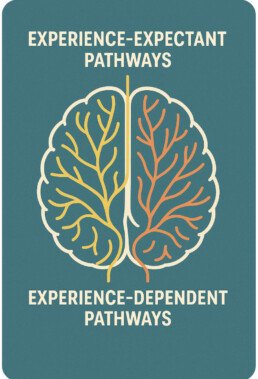
From the moment we are born, our brains are wired with remarkable potential. Dr. Dan Siegel’s Interpersonal Neurobiology reminds us that human beings develop through two kinds of neural pathways:
Experience-Expectant Pathways
These are the “hardwired” pathways we are born with, designed to expect and rely on certain experiences. For example, our brains are primed for language—we expect to hear words, to connect, to be nurtured. Importantly, as children, we are also hardwired to expect care. We anticipate being comforted when we cry, protected when we are frightened, and seen when we express joy.
Experience-Dependent Pathways
These pathways are shaped through what we learn and practice. Think of learning to ride a bike or play the guitar—at first it feels wobbly, unsteady, even impossible. But repetition strengthens those pathways until the skill feels natural. If we never take up cycling or music, those neural resources may be used in different ways.
When Nurture is Missing
When children’s experience-expectant needs for safety, love, and care are not met, those unmet needs don’t simply vanish. They leave echoes in the nervous system.
Instead of learning, “I am safe, I am loved, I am worthy,” many children internalise the opposite message. When caregivers criticise, shame, blame, or humiliate, children—whose very survival depends on attachment—rarely ask, “What’s wrong with my parent?” Instead, they ask, “What’s wrong with me?”
Sometimes this shows up in less obvious but equally impactful ways. For example, if an inexperienced caregiver consistently responds to a crying infant with food—rather than curiosity about what the child might truly need—the child learns to associate distress with eating, rather than being soothed, comforted, or understood. Fast forward into adulthood, and that same nervous system pattern can surface as someone standing in front of the fridge, not actually hungry but feeling unsettled and thinking: “I don’t know what I need.”
Over time, these repeated experiences strengthen neural pathways of self-criticism and self-doubt, while weakening the pathways of self-compassion and self-worth. This can manifest later in life as:
- Self-loathing
- Lack of confidence
- Chronic self-doubt
- The tendency to compare ourselves with others and wear a persona—a mask of confidence without inner substance
Mimicking What Looks Like “Normal”
Many people move through life mimicking what they believe is “normal” in others. They copy the behaviours, mannerisms, or confidence of those around them without having developed an inner sense of safety or self-worth. This isn’t true resilience—it’s survival. On the surface, they may appear confident, successful, or in control, but underneath there is often a fragile nervous system still searching for regulation, belonging, and authenticity. What looks like confidence is sometimes just a mask—an attempt to fit in when the inner story still whispers, “I am not enough.”
The Hope of Neuroplasticity
Here’s the good news: the brain is not fixed. Neuroplasticity is the lifelong ability of the brain to grow, change, and rewire itself. Just as negative experiences strengthened self-critical pathways, repetition of positive, self-affirming experiences can strengthen new pathways of self-worth.
Simple, consistent practices—such as guided affirmations (“I am worthy,” “I am enough,” “I am safe”)—might feel uncomfortable at first, just like those first wobbly pedals on a bike. But with repetition, these affirmations begin to “take root” in the nervous system. Over time, the brain learns to default to kindness instead of criticism.
From Survival to Thriving
When our nervous system is stuck in survival (constantly scanning for threat, whether real or perceived), we cannot easily learn, connect, or grow. But as we nurture new neural pathways of self-compassion, we move more often into the state of ventral vagal safety—a place where we feel safe, grounded, and capable of thriving.
This isn’t about pretending everything is fine or ignoring the pain of generational trauma. It’s about rewiring the way we speak to ourselves, so that the echoes of unmet needs are no longer louder than the truth of our inherent worth.
This is the Work We Do at A Positive Start CIC
At A Positive Start CIC, this understanding sits at the heart of everything we do. We support people who have lived through trauma to reconnect with their nervous systems, rebuild pathways of safety, and discover new ways of relating to themselves and others.
Through our Reconnect & Regulate workshops, STAND – Parents as Protectors programme, and the River Room Songbook for children, we use trauma-informed approaches to:
- Help people notice the stories they tell themselves
- Strengthen self-worth through repetition, connection, and compassion
- Provide safe, supportive spaces where healing and growth can take place
- Break cycles of generational trauma by offering new, healthier patterns of care and connection
We believe that change is possible at any stage of life. With the right knowledge, support, and practices, we can all learn to give ourselves the compassion we deserved from the beginning—and pass that healing forward.
Neuroplasticity shows us that it is never too late. At A Positive Start CIC, we walk alongside individuals, families, and communities to help them rewrite their inner stories, one compassionate step at a time.
by Deborah J Crozier
Founder & Lived Experience Practitioner at A Positive Start CIC

STAND: Parents as Protectors – A Journey of Awareness, Not Blame
Parenting in today’s world can feel overwhelming. We’re constantly juggling everyday responsibilities while trying to keep our children safe in a world that doesn’t always feel safe. That’s why we created STAND: Parents as Protectors — a free, online, self-paced program for parents, caregivers, and those in loco parentis who want to deepen their understanding of how to protect children from harm.
This is not about blame, criticism, or “teaching granny how to suck eggs.” It’s about sharing insight drawn from lived experience — real-life lessons about how our own histories shape our reactions and decisions. When we become more aware of this, we grow. We begin to see things more clearly. And in that clarity, we become even stronger protectors for the children in our care.
What makes STAND different?
- REAL CPD accredited by A Positive Start CIC – REAL stands for Regulated, Ethical, Accessible, Lived-experience led.
- Partnership with Safeguarding Fundamentals – working together to raise the bar of safeguarding standards.
- Not your standard safeguarding course – If you’ve completed safeguarding training before (perhaps for work), this will feel very different. Here, we look deeper, go behind the scenes, and explore what’s really going on — including the subtle warning signs that often get missed and the emotional dynamics that influence our responses.
- Self-paced and flexible – You can drop in and out whenever your schedule allows. No pressure, no deadlines.
- Practical prevention tools – Learn real-world strategies for protecting not just children, but also families and ourselves. Prevention is key — and in many situations, we may be the first and only line of defence.
- Interactive learning – Each module includes reflections, worksheets, and quiz questions to deepen your understanding and encourage personal growth.
- Supportive community – Option to Join a Facebook support group
What you’ll discover
You’ll learn about the techniques used to groom individuals, families, and even whole communities — and how to recognise them before harm is done. You’ll explore how your own experiences and history might influence your reactions, and how increasing your self-awareness can make you a stronger, calmer, and more effective protector.
This isn’t just about “what to look for.” It’s about understanding why some warning signs are missed, how trust can be manipulated, and what small actions can create much safer environments for children.
Why we do this
We believe that creating safer homes and communities starts with awareness — both of external risks and of our own internal patterns. Through lived-experience-led insight, we can all become more prepared, more confident, and more connected in safeguarding the children we love.
Our mission is simple: to equip parents and caregivers with the knowledge, skills, and insight they need to protect children from harm before it happens. Prevention is always better than cure, and safeguarding is most powerful when it’s rooted in real-life understanding, compassion, and courage.
This is a journey of discovery, not a lecture. It’s an opportunity to explore, reflect, and grow alongside others who care deeply about protecting children.
If you’re ready to take that step, we’d love to welcome you. Because protecting children isn’t about fear — it’s about knowledge, connection, and courage.
How to join:
We ask all participants to register for the program via our website. Once you receive your welcome email, you’ll also be given the option to join our private Facebook support group. This extra step helps protect the integrity of the course and ensures that our learning space remains safe from spam and bots.
Because the more we understand, the better we can protect our children, families… and ourselves.
Through the Lens of the Dorsal Space
Through the Lens of the Dorsal Space: Why Forcing ‘Motivation’ Can Harm, Not Help
When you’re in the dorsal space, you can see life happening around you — people laughing, planning, dreaming — but it’s like watching it all through thick, soundproof glass. You can see their joy, but it doesn’t touch you. You can’t step through. You can’t feel it. It’s not that you don’t want to — it’s that your nervous system has switched into survival mode, and joy has become unreachable.
I see this often with clients who have lived through complex trauma. They describe feeling like a ghost in their own life — present in body but absent in spirit. From the outside, it can look like apathy or lack of effort. From the inside, it feels like being buried under wet sand. Every movement takes more energy than you have, and every thought of “just try harder” lands like a weight, not a lift.
What is the dorsal vagal state?
According to Polyvagal Theory, developed by Dr Stephen Porges, the vagus nerve has two main branches:
- Ventral vagal — the state of safety, social connection, and calm engagement.
- Dorsal vagal — the state of shutdown, disconnection, and collapse when the system perceives escape or fight is impossible.
The dorsal vagal state is not a character flaw or a ‘disorder’. It’s an adaptive survival response. In extreme stress or danger, the body conserves energy, slows systems down, and numbs sensation so we can endure what feels inescapable.
But here’s the challenge: when we are in dorsal, it feels permanent. Hope is chemically out of reach. The world becomes distant and muted. We view life through a lens that tells us this is all there is. And because the state changes our physiology, no amount of “positive thinking” can lift us out.
It’s a temporary state — that feels permanent. How long we stay there is often determined by the quality of support we receive. Co-regulation with a compassionate, consistent, and attuned person can light the path out.
People often say, ‘Polyvagal Theory is only theoretical.’ It’s not theoretical to those who have lived there. It’s only theoretical to those who haven’t experienced it.
The illusion of permanence
Hopelessness in the dorsal state is convincing because our body is actively protecting us from feeling too much. The same numbing that shields us from pain also shields us from joy. We literally can’t access the part of our nervous system where motivation, play, and curiosity live.
It’s an illusion — but a powerful one. The nervous system will shift given time, safety, and gentle steps back toward connection. But the shift cannot be forced. Trying to push someone in dorsal into action or “cheer up” is like demanding they sprint on a broken leg. It’s not encouragement — it’s further injury.
From my own experience
After my own trauma, I felt as though I had slipped through the cracks in the earth — gone, disconnected from the world and everyone in it. It was like being trapped in a round room with no doors, no windows, no escape routes.
People — professionals included — could make as many suggestions or demands as they liked about what I should do. My only thought was, “They can’t see where I am. They don’t understand. I don’t have access to those things from here.” And it was true — from the dorsal space, the pathways they were pointing to didn’t exist for me. It was too exhausting to even pretend they did.
There is only one safe way out of dorsal: through safety itself. That means compassion, kindness, empathy, reassurance, consistency, and care. I created our TRUST framework from this personal understanding — because without safety, nothing changes, and with it, everything can.
When misunderstanding causes harm
Recently, I heard about a distressing incident in an online mental health support group. A participant, having a difficult day, requested to keep their camera off so they wouldn’t be seen. The facilitators told them, “You know the rules,” and insisted they turn it on, warning they would lose their place in the group if they didn’t comply.
For that person, who was already in a fragile nervous system state, the threat wasn’t motivational — it was devastating. In dorsal, even small demands can feel like heavy blows. The message they received wasn’t “We care about you” but “You’re a problem.” Others in the group witnessed the struggle and were distressed too. Trauma responses are contagious; unsafe handling ripples through the whole room.
No one has the right to dictate how someone should navigate their own survival. In the dorsal space, the focus is often simply to get through the day. Listening to your body and honouring what it needs is not avoidance — it’s wisdom.
The hidden cost to helpers
There’s another harm that isn’t talked about enough: the moral injury that can occur when a well-meaning person later realises the damage they caused. Forcing someone to comply when they are in shutdown can wound them deeply — but it can also wound the one who pushed, once the reality sinks in.
I don’t believe most people set out to harm others — but harm still happens when we act without understanding. That awareness can be devastating in hindsight, bringing guilt, regret, and even burnout. We can prevent this on both sides by meeting people where they are, listening to what they need, and replacing compliance with compassion.
What empathy looks like in practice
If we truly want to help, we need to understand the lens of the dorsal space and work with it, not against it. That means:
- Respecting stated needs — whether that’s keeping a camera off, sitting quietly, or not engaging verbally.
- Offering choices, not ultimatums.
- Listening first, problem-solving later.
- Recognising that “motivation” is a ventral state experience — it’s not available in shutdown.
An invitation to change the conversation
If you’re a mental health professional, facilitator, or simply someone who supports others, please remember: the rules you set for participation might feel safe and reasonable to you, but for someone in dorsal, they might be the difference between staying connected and retreating further into isolation.
Meeting people where they are is not enabling — it’s the first step in building safety. Safety is what makes change possible.
Closing reflection
If you are in the dorsal space right now, please know this: the way you feel is real, but it is not forever. Your nervous system is doing its best to protect you. There is nothing defective about you. You are not “too much” or “too little.” You are human, and you are surviving.
And if you are alongside someone in dorsal, remember that your compassion is not just kindness — it is medicine. It is the bridge that can carry someone, gently and slowly, toward the possibility of joy again.
Walking the Tightrope: Staying Trauma-Informed While Protecting Ourselves and Others
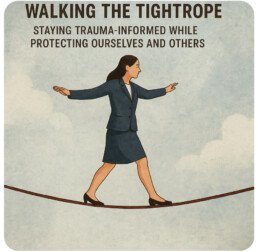
Remaining trauma-informed while protecting both ourselves and those who rely on us for support can feel like walking a tightrope. It’s a precarious balance of boundary-setting and self-awareness, and it’s not always clear where one ends and the other begins.
Even when we take care to make decisions with compassion, integrity, and awareness, there’s no way to predict exactly how those decisions will land with others. This is particularly true when we’re holding responsibility—not just for ourselves, but for an organisation, those who give their time and energy to support it, and those who benefit from its work.
As a leader, I’ve learned that navigating these moments isn’t straightforward. You try to manage change, disappointment, or challenge in ways that are consistent with your mission and values, and yet… someone will always feel it could have been done differently.
That’s the human part of this work—our own experiences, histories, and wounds inevitably shape how we perceive decisions made by others. Sometimes those wounds mean that no matter how gently or thoughtfully you try to communicate, the impact still feels raw.
The Questions Behind Every Decision
For me, making decisions always comes with a set of internal questions:
- What is my motivation for making this decision?
- Am I angry? Am I frustrated?
- What emotions are at play here?
- What is my intention?
- Who does this decision serve?
- Who and how will it impact?
- What’s my learning here? What’s the learning for others?
I treat ego like the devil in these settings—“get thee behind me”—and instead try to view the situation through the lens of compassion and empathy.
I imagine walking around a compass in my mind:
- My view
- Their view
- Both views together
- The overall, big-picture view
I call this process internal conflict resolution—it’s the way I navigate the moments where decisions make me question myself.
The Truth at the Core
In the end, I’ve come to accept that there’s no perfect path—only the path that feels truest to your principles after you’ve considered all the options. That often means:
- Staying grounded in truth, even when it’s uncomfortable.
- Making space for compassion, even when it’s not returned.
- Holding boundaries firmly, even when they’re questioned.
- Accepting that not everyone will agree, even when you’ve acted with care.
Being trauma-informed doesn’t mean avoiding difficult decisions—it means making them with awareness of their potential impact, and doing so in a way that honours both your values and your wellbeing.
We can’t ensure that everyone feels completely supported all the time. But we can strive for transparency, empathy, and integrity—so that even when the outcome isn’t what someone hoped for, they can still trust that it came from a place of genuine care.
Because in the work we do, there’s one thing I know for certain: self-awareness and truth are not luxuries—they are essential to sustaining the kind of support that changes lives.
My Approach to Therapy
Meeting You Where You Are
My therapeutic approach is intentionally simple, responsive, and deeply person-centred. It’s about meeting you
where you are on the day, not fitting you into a pre-prepared plan. I keep my session notes minimal — often no
more than “held space” — unless there’s something important to record, such as a disclosure or a sudden
change. This means my full attention stays with you, not on paperwork. Minimal notes are not “no notes” — they
are focused, purposeful, and meet professional and safeguarding standards. I also choose not to read referral
notes before we meet. This isn’t because I don’t value other professionals’ insights, but because I want to hear
your story in your words, without the influence of someone else’s opinions or labels. If I need background
information later for your safety or for treatment planning, I will request it then.
Why I Work This Way
I believe therapy is most effective when it is tailored to the individual in the moment. I rarely plan sessions in
advance, though I have a wide range of resources I can draw on. Many of these are created together in the
session — asking you to write down your thoughts, goals, or feelings — so they are truly yours. When you are
actively engaged in the process, change can be powerful. If it becomes clear that a different approach might be
more helpful, I will suggest a referral to another therapist or service, either internally or externally. My priority is
always that you get the kind of support that best meets your needs.
The Ethics Behind My Approach
My way of working is not only intentional, it’s grounded in professional ethical codes and trauma-informed
principles — safety, choice, collaboration, trust, and empowerment. I start with your voice, not someone else’s
notes. By meeting you without reading referral notes first, I reduce the risk of unconscious bias and ensure you
shape the narrative from the start. Minimal notes, maximum presence. I keep records only as needed for safety,
safeguarding, or important changes. This respects your privacy and keeps me present with you. No
one-size-fits-all plans. I respond to what you bring on the day, rather than imposing a predetermined structure.
Your autonomy matters. You are the expert in your own life. I am here to walk alongside you, not lead you down a
path that isn’t yours.
A trauma-informed foundation:
• Safety – You are met without judgement or assumptions.
•Trust – I am transparent about how I work.
• Choice – You decide what to share and how we work.
• Collaboration– We create tools and strategies together.
• Empowerment – Our work builds on your strengths.
For Professionals
If you are a professional or referrer who wishes to understand the ethical reasoning behind my approach, you can
read my full Ethical Position Statement here:
■ Ethical Position Statement (PDF available on request)
This document outlines how my approach aligns with the BACP Ethical Framework, ACCPH Standards, and SAMHSA
Trauma-Informed Care Principles, and why it is both safe and effective.
Full Ethical Position Statement
Purpose
To outline the ethical reasoning behind my therapeutic approach, including minimal note-taking, not requesting
referral notes upfront, and allowing sessions to develop responsively rather than from a fixed plan.
1. Client Autonomy & Self-Determination
BACP Ethical Framework (2018): Counsellors must “respect the right of clients to be self-governing” (Principle:
Autonomy).
My approach ensures the client’s voice is the starting point. I do not seek pre-existing referral notes
before meeting a client, as this protects against unconscious bias and allows their own lived experience to take
priority. This honours the client’s right to shape the narrative about themselves without external interpretation
influencing the therapeutic relationship from the outset.
2. Non-Maleficence & Avoiding Diagnostic Overshadowing
BACP Ethical Framework (2018): Counsellors should “avoid harming clients” (Principle: Non-maleficence).
By avoiding upfront third-party reports, I reduce the risk of prejudgement, misinterpretation, or limiting the client to the language of pathology. This protects the integrity of the therapeutic alliance and prevents harm caused by
imposed labels or deficit-based thinking.
3. Informed Consent & Transparency
BACP Ethical Framework (2018): “Communicate clearly what clients can expect” (Good Practice). My contracting
process explicitly explains that I will start with the client’s own account, keep minimal notes, and co-create
resources as needed. This transparency allows the client to make an informed decision about working with me.
4. Record-Keeping & Safeguarding Compliance
ACCPH Standards & BACP Guidance: Record-keeping must be “appropriate, accurate and timely” and
“necessary for the purpose.” I maintain minimal, focused notes (e.g., “held space”) unless safeguarding,
disclosures, or significant changes require more detail. This ensures confidentiality, reduces unnecessary data
storage, and still meets safeguarding, legal, and professional obligations.
5. Individualised, Needs-Led Practice
BACP Ethical Framework (2018): Counsellors should “be attentive to the needs and best interests of clients.”
I rarely pre-plan sessions and instead meet clients where they are, drawing on resources only when relevant. Many resources are co-created with the client to ensure they are meaningful and empowering. This ensures flexibility, responsiveness, and genuine person-centred practice, rather than a one-size-fits-all model.
6. Trauma-Informed Principles
SAMHSA Trauma-Informed Care Principles: Safety, Trustworthiness, Choice, Collaboration, Empowerment.
•Safety:
Clients are met without judgement or preloaded assumptions. • Trustworthiness: My approach is
transparent from the start.
• Choice:
Clients decide how to share their story and what resources we use.
•Collaboration:
We co-create tools and strategies.
• Empowerment:
The client is the expert in their own life; my role is to walk alongside them.
Summary
This approach is consistent with professional ethical codes, trauma-informed care principles, and the commitment
to do no harm, protect client autonomy, and provide responsive, needs-led support. It is not a refusal to use
existing information or structure, but a conscious sequencing of when and how those elements are introduced to
best serve the client’s interests